
A good safe can last for generations, but like any mechanism it needs a little care. Most lockouts we see could have been prevented with a few simple checks. Here is a routine that takes minutes.
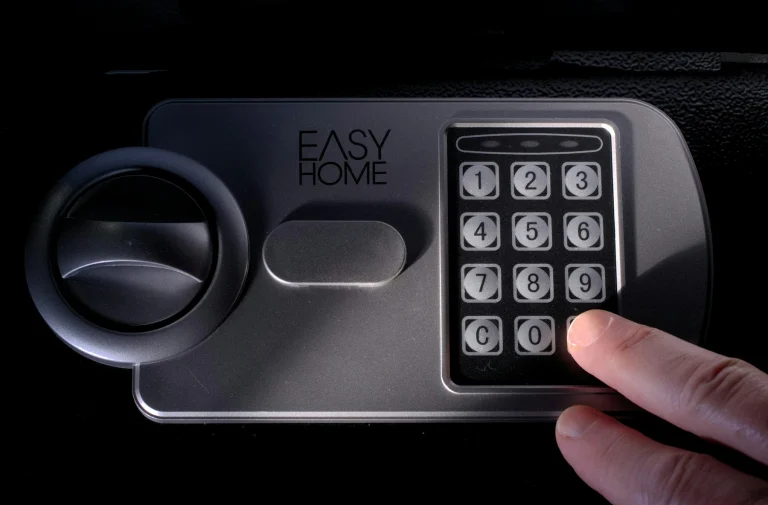
Digital locks
- Replace the batteries at least once a year, even if they still work. Lock maker dormakaba (LA GARD) recommends replacing them at least annually.
- Replace them straight away if the lock beeps or flashes to warn of a low battery.
- Use fresh, good-quality alkaline batteries, and replace all of them at once.
- Keep the keypad clean and dry.
Mechanical combination locks
- Turn the dial smoothly and slowly; do not spin it hard.
- If the dial feels rough or stiff, have it looked at before it fails.
- Have the lock serviced regularly; many safe technicians suggest every two to three years for normal use, and more often for heavy daily use.
Door, bolts and hinges
- Check that the bolts move freely when you turn the handle.
- Do not slam the door, and keep the door edge and frame clear so nothing stops the bolts.
- Do not overfill the safe so that items press against the door.
- Never spray lubricant into the lock or keyhole.
Fixings
If your safe is bolted down, check now and then that the bolts are still tight and the safe does not move.
Codes and keys
- Keep a record of the combination or code somewhere secure, away from the safe.
- Change the code when staff leave, or after a tradesperson has seen it.
- Keep spare keys and override keys away from the safe, never inside it.
A yearly check, in five minutes
- Replace the batteries (digital locks).
- Open and close the safe a few times; check the bolts and handle feel smooth.
- Check the fixings are tight.
- Confirm your code record and spare keys are safe and up to date.
- Book a service if anything feels stiff, rough or slow.
Professional servicing
We service and repair safes of all makes, including Chubb, Platinum and CMI, on-site or in our Lilydale workshop. Read about safe repairs and servicing, or book a service. Quotes are free.